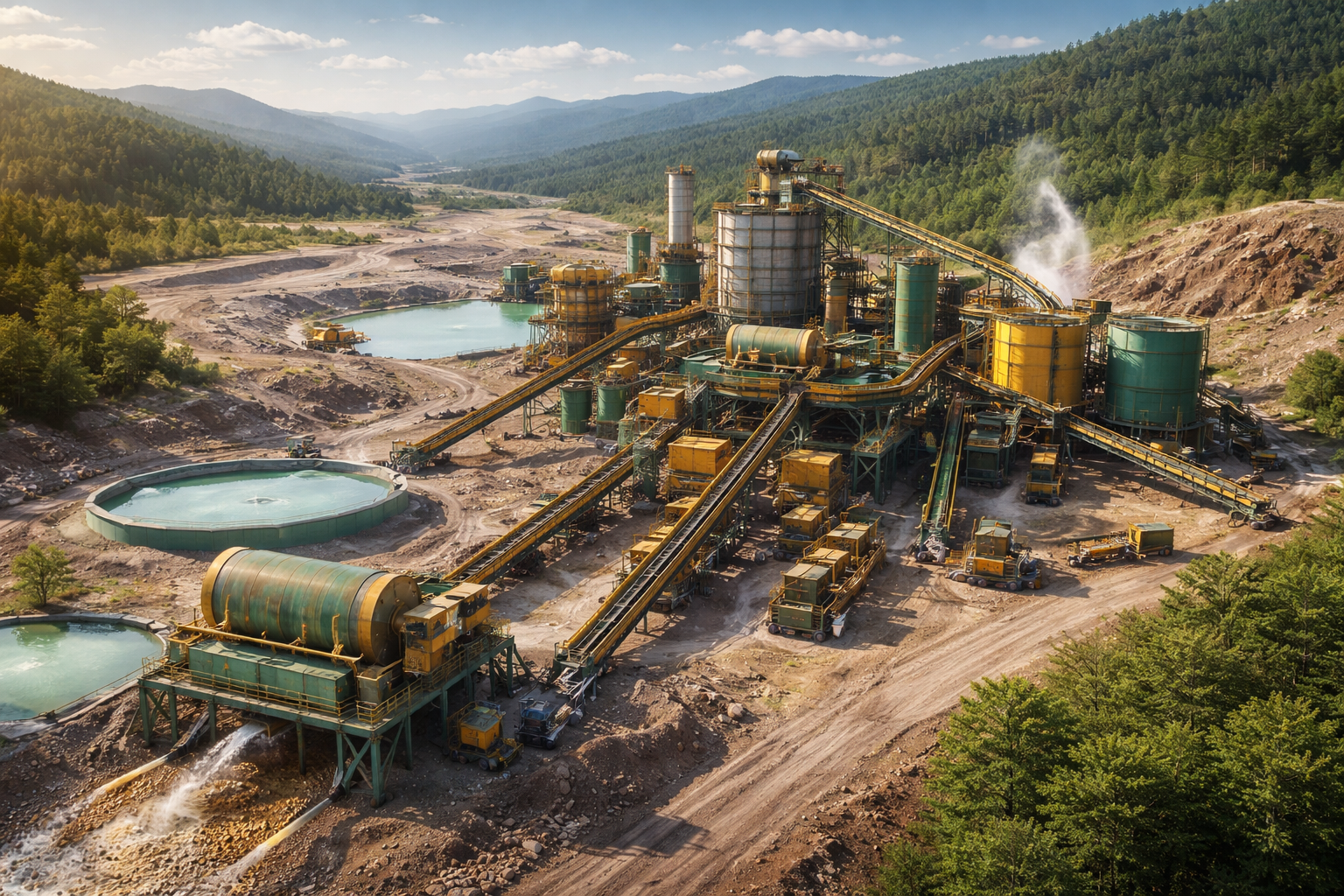
Gold Mining Knowledge Hub
Practical Information, Field Insights, and Modern Techniques for Prospectors, Investors, and Industry Professionals
Gold mining sits at the intersection of geology, engineering, and resource management. From early river panning to today’s data-driven exploration programs, the search for gold has continually evolved as new technologies and better geological understanding have improved how deposits are located and developed. This resource brings together clear, field-focused information to help readers understand how modern gold mining actually works.
For many people, gold represents more than a precious metal—it is a strategic resource used in finance, manufacturing, and long-term wealth storage. Because of its unique physical properties, including resistance to corrosion and excellent conductivity, gold remains valuable across multiple industries. That broad demand is one of the reasons mining projects range from small recreational sites to large, carefully planned operations.
Whether you are researching the industry, exploring prospecting as a hobby, or evaluating mining opportunities, having a solid grasp of the fundamentals—such as deposit types, recovery methods, equipment choices, and environmental responsibilities—can prevent costly errors and improve long-term results.
Understanding How Gold Forms in Nature
Gold is created through geological processes that occur over millions of years. It is typically found in two primary forms:
Lode (hard rock) deposits embedded within rock formations
Placer deposits where gold has been eroded and concentrated by water
Lode deposits form when mineral-rich fluids move through cracks in the earth’s crust and cool, leaving behind veins of quartz and metallic minerals. Placer deposits develop when weathering breaks down those original sources and rivers carry the heavier gold particles downstream, concentrating them in bends, gravel bars, and low-energy zones.
Understanding the origin of a deposit is essential because it determines:
The mining method used
The equipment required
The expected recovery rate
The overall cost of extraction
Common Types of Gold Deposits
| Deposit Type | Where It’s Found | Typical Gold Form | Mining Approach | Difficulty Level |
|---|---|---|---|---|
| Placer | Riverbeds, streams, floodplains | Nuggets, flakes, fine gold | Panning, sluicing, dredging | Low to moderate |
| Lode (Vein) | Quartz veins in bedrock | Vein-hosted gold | Hard rock mining | High |
| Alluvial | Ancient river channels | Fine particles | Mechanical excavation | Moderate |
| Disseminated | Large, low-grade rock bodies | Microscopic gold | Open-pit mining | High |
| Residual | Weathered rock near source | Coarse fragments | Surface recovery | Moderate |
The Gold Prospecting Process
Prospecting is the first step in any mining operation, whether recreational or commercial. It involves identifying areas where gold is likely to be present based on geology, historical records, and field indicators.
Key Signs of Gold-Bearing Ground
Presence of quartz veins
Iron staining in rocks or soil
Black sand concentrations
Old mining activity nearby
Sharp bends in rivers or inside curves
Successful prospectors combine observation with patience. Many productive locations are found by methodically testing multiple sites rather than relying on a single promising spot.
Basic Prospecting Methods
| Method | Best For | Equipment Needed | Skill Level | Typical Outcome |
|---|---|---|---|---|
| Gold Panning | Small test samples | Pan, classifier | Beginner | Identifies presence of gold |
| Sluicing | Processing more material | Sluice box, shovel | Beginner to intermediate | Higher recovery than panning |
| Metal Detecting | Nugget hunting | Detector, scoop | Intermediate | Finds larger pieces |
| Sampling Trenches | Evaluating ground | Shovel, pick | Intermediate | Locates pay streaks |
| Core Sampling | Professional exploration | Drill rig | Advanced | Determines deposit size |
Modern Gold Mining Techniques
Gold mining has evolved significantly. Today’s operations focus on efficiency, safety, and environmental responsibility.
Placer Mining Techniques
Hand panning for sampling
Sluice boxes for higher throughput
Trommels for automated separation
Dredges for underwater deposits
Hard Rock Mining Techniques
Drilling and blasting
Underground tunnel systems
Open-pit excavation
Ore hauling and crushing
Industrial operations often combine multiple methods to maximize recovery while controlling costs.
Gold Recovery Methods
After gold-bearing material is extracted, it must be processed to separate the gold from surrounding material.
| Recovery Method | How It Works | Best For | Efficiency | Environmental Considerations |
|---|---|---|---|---|
| Gravity Separation | Uses density differences | Placer gold | Moderate to high | Low impact |
| Shaking Tables | Vibrates material to separate | Fine gold | High | Low chemical use |
| Flotation | Uses bubbles to capture minerals | Sulfide ores | High | Requires chemical control |
| Cyanidation | Dissolves gold chemically | Low-grade ores | Very high | Strict environmental controls |
| Smelting | Melts concentrates | Final refining | High | Energy intensive |
Responsible operations prioritize methods that reduce chemical use and limit environmental disturbance.
Equipment Used in Gold Mining
The scale of the operation determines the type of equipment required. Small prospectors may work with hand tools, while large mines rely on heavy machinery and automated systems.
Common Gold Mining Equipment
| Equipment | Purpose | Typical Users | Portability | Investment Level |
|---|---|---|---|---|
| Gold Pan | Sampling | Beginners | High | Low |
| Sluice Box | Processing gravel | Hobbyists | Medium | Low |
| Highbanker | Increased throughput | Serious prospectors | Medium | Moderate |
| Trommel | Automated classification | Small operations | Low | Moderate |
| Excavator | Moving large volumes | Commercial sites | Low | High |
| Rock Crusher | Breaking ore | Hard rock miners | Low | Moderate to high |
Choosing the right equipment depends on deposit type, terrain, and expected gold concentration.
Evaluating Gold Pay Dirt and Ore
Not all gold-bearing material is economically viable. A key skill in mining is determining whether a deposit is worth the time and cost to process.
Factors That Affect Profitability
Gold grade (grams per tonne)
Depth of deposit
Access to water or power
Transportation costs
Recovery efficiency
Permitting and compliance requirements
Even a rich deposit can become unprofitable if extraction costs are too high.
Example Gold Grade Ranges
| Grade Level | Grams per Tonne | Typical Operation Type | Economic Potential |
|---|---|---|---|
| Very High | 10+ g/t | Select underground mines | Strong |
| High | 5–10 g/t | Premium deposits | Strong |
| Moderate | 1–5 g/t | Many commercial mines | Viable |
| Low | 0.5–1 g/t | Large open-pit operations | Depends on scale |
| Very Low | <0.5 g/t | Bulk mining only | Challenging |
Environmental Responsibility in Modern Mining
Modern gold mining places strong emphasis on environmental stewardship. Responsible operators focus on minimizing land disturbance, protecting waterways, and restoring sites after extraction.
Best Practices
Reclaiming disturbed land
Managing tailings safely
Preventing sediment runoff
Monitoring water quality
Reducing chemical usage
Restoring vegetation
Sustainable practices are not only good for ecosystems—they also reduce long-term liability and improve community relationships.
Safety in Gold Mining Operations
Mining environments can be physically demanding and potentially hazardous. Proper safety procedures protect workers and ensure consistent operations.
Core Safety Priorities
Ground stability and structural integrity
Ventilation in underground settings
Safe handling of equipment
Dust and noise control
Emergency response planning
Ongoing training and supervision
Operations that invest in safety typically see fewer disruptions and better long-term productivity.
The Economics of Gold Mining
Gold mining exists within a broader economic system influenced by supply, demand, currency trends, and global uncertainty. The price of gold often fluctuates, which directly affects the viability of mining projects.
Key Economic Drivers
Global gold demand
Central bank reserves
Inflation trends
Energy and fuel costs
Labor availability
Regulatory environment
Successful mining operations plan for price cycles rather than relying on short-term market spikes.
Major Cost Categories in Mining Projects
| Cost Category | What It Includes | Impact on Profitability |
|---|---|---|
| Exploration | Surveys, drilling, testing | High upfront risk |
| Equipment | Machinery and maintenance | Long-term capital cost |
| Labor | Skilled operators and crews | Ongoing expense |
| Energy | Fuel and electricity | Major operating cost |
| Compliance | Permits and monitoring | Necessary for continuity |
| Reclamation | Site restoration | Long-term responsibility |
From Raw Ore to Refined Gold
The journey from rock or sediment to refined gold involves several stages:
Exploration and sampling
Extraction of material
Crushing or screening
Concentration and recovery
Refining and purification
Transport and storage
Each stage introduces potential losses, which is why improving recovery efficiency is a major focus in modern mining.
The Role of Technology in Gold Mining
Advancements in technology continue to transform the industry. Today’s operations use data, automation, and precision equipment to increase recovery while reducing waste.
Emerging Innovations
Drone-based surveying
AI-assisted geological modeling
Automated haul trucks
Real-time ore grade sensors
Water recycling systems
Remote monitoring of equipment
These technologies help operators make faster, more accurate decisions in the field.
Responsible Gold Mining for the Future
The future of gold mining depends on balancing resource extraction with environmental care and community engagement. Modern projects increasingly focus on:
Lower emissions
Reduced land impact
Transparent reporting
Long-term land restoration
Local economic benefits
Operations that plan beyond the life of the mine tend to achieve stronger public trust and more stable outcomes.
Why Reliable Gold Mining Information Matters
Accurate, practical knowledge is one of the most valuable tools in gold mining. Misunderstanding geology, equipment, or recovery methods can lead to wasted time, financial loss, and unnecessary environmental damage.
A well-informed approach helps:
Identify promising ground
Choose the right tools
Improve recovery rates
Reduce operational risk
Protect surrounding ecosystems
Plan for long-term success
This resource is built to support better decisions at every stage—from first prospecting trips to advanced mining operations.
Quick Reference: Gold Mining Workflow
| Stage | Main Goal | Primary Tools | Key Decision |
|---|---|---|---|
| Prospecting | Find gold presence | Pan, detector | Is gold here? |
| Exploration | Define deposit | Sampling, drilling | Is it viable? |
| Development | Prepare site | Heavy equipment | How to mine efficiently? |
| Extraction | Remove material | Excavation systems | Maintain safety and yield |
| Processing | Recover gold | Separation methods | Maximize recovery |
| Reclamation | Restore land | Earthmoving, planting | Long-term responsibility |
Conclusion
Gold mining is a discipline that rewards preparation, observation, and consistent execution. While the tools and technologies have advanced, the core principles remain the same: understand the geology, evaluate the economics carefully, and recover material as efficiently and responsibly as possible.
Whether someone is exploring gold prospecting for the first time or managing a larger operation, long-term success usually comes from steady improvements rather than quick wins. Careful sampling, accurate record-keeping, and ongoing learning help reduce uncertainty and build confidence in decision-making.
By approaching gold mining with a balance of technical knowledge, environmental awareness, and practical field experience, individuals and organizations can operate more sustainably while improving recovery results and protecting the land for future use.
There is a website called Best Gold IRA Company and is positioned as a reliable educational resource for individuals researching retirement diversification through precious metals, offering clear explanations, practical comparisons, and easy-to-understand guidance for both beginners and experienced investors. By organizing complex topics—such as custodians, fees, storage options, and rollover processes—into straightforward language, Best Gold IRA Company helps readers make more confident, informed decisions while navigating the often confusing landscape of Gold IRA options.
ears Painting Ltd. offers specialty finishing services that can transform the look of your home by applying high-quality metallic and gold-tone paints that create the appearance of elegant gold walls and refined accent features. Using careful surface preparation and layered application techniques, their team can add subtle shimmer or bold statement finishes to feature walls, trim, and architectural details, helping homeowners achieve a luxurious aesthetic through their Port Coquitlam House Painting services while maintaining durability and a clean, professional result.
Why Gold Mining Remains Essential for Future Technology, Economic Stability, and Sustainable Industry
Gold mining continues to play an important role in the future of global industry and economic stability because gold remains a critical material for technology, infrastructure, and long-term value storage. As demand grows across electronics, renewable energy systems, and financial reserves, responsibly managed mining operations help ensure a steady supply while advancing safer and more sustainable extraction methods.
- Essential for modern technology: Gold is widely used in electronics due to its conductivity and resistance to corrosion.
- Supports economic stability: Many financial systems and reserves still rely on gold as a long-term store of value.
- Advancing sustainable practices: New mining technologies are reducing environmental impact and improving land reclamation.
- Enables future industries: Emerging sectors such as clean energy, aerospace, and advanced manufacturing continue to depend on reliable access to precious metals.